
Parinirvana Day – Embracing change
Hearty greetings to all of you. I am Manas, and I feel grateful to have this opportunity to share a thing or two on Buddha’s teachings.
Before I jump right into the wise talks (Buddhist teachings have to be, don’t they?), let me add a bit about myself to start it light.
After a decade of fast-paced life in the corporate world, I transitioned into a minimalist and intentional lifestyle. The process helped me to tune myself to a kind of living where I could be at peace from within.
Since then, I have been writing about spirituality, mindfulness, and mental health, along with conducting life coaching for a few.

Am I a Buddhist?
If you consider someone born into a Buddhist family or ordained into one of the Buddhist monk orders as Buddhist, then I don’t fit the description. Then, on what authority am I to advise anyone on the Buddha’s teachings?
His teachings are universal, and whoever practices his prescribed methods can have the direct experience of the truth. In one of the suttas (the written transcripts of his teachings), he mentions not to believe his teachings blindly, but to investigate and reason if they lead to freedom from suffering.
Of course, Buddhism as a tradition is replete with rituals and cultural norms, which in themselves are beautiful like the others. But to absorb his teachings into one’s life and make progress towards liberation, one needn’t be a Buddhist, in a usual sense.
Having practised his teaching sincerely, I was able to cultivate clarity, simplicity, and gratitude in my life, and therefore, would be happy to share the path with others.
As Parinirvana Day approaches, which falls on February 15, 2026, let me share with you a story from the life of the Buddha.
The Story of Kisa Gotami
A young woman named Kisa Gotami experienced many hardships in her life, including the loss of a loved one.
Overcome with grief, she was unable to accept what had happened and went from house to house, begging others to help her bring her loved one back to life.
No one could offer what she was seeking, but a monk advised her to visit the Buddha.
When she met him, she shared her story. He listened with deep compassion and gently instructed her to bring him four or five mustard seeds from a household where no one had ever died, assuring her that he could help her with those seeds.
With urgency and hope, she began her search. From morning until sunset, she knocked on doors throughout the town. Each family was willing to give her mustard seeds, but when she asked whether death had ever touched their home, the answer was always the same, someone, at some time, had passed away.
Through this journey, Kisa Gotami came to understand that loss is a shared human experience. No one is untouched by it. In recognising this, she found the strength to accept her own grief.
The Buddha understood that when we are consumed by suffering, we cannot easily see the deeper truths of life. Sometimes, wisdom must be discovered through direct experience, not words alone.

Stop Fighting the Change
This parable, although tragic, has a lot to teach us. It is specifically important during our times that change with unprecedented pace.
We keep reading how fast the technology is evolving. A World Economic Forum paper says that it took 2.4 million years for our ancestors to tame fire and use it for cooking, but it only took us 66 years from the first flight to put a man on the moon.
But everything is so intertwined, thanks to the internet, that a change in a single domain results in changes in all others. We are witnessing exponential changes in social norms, values, family, work conditions, and even identity. It is not unnatural to sometimes feel like being caught up in a whirlwind.
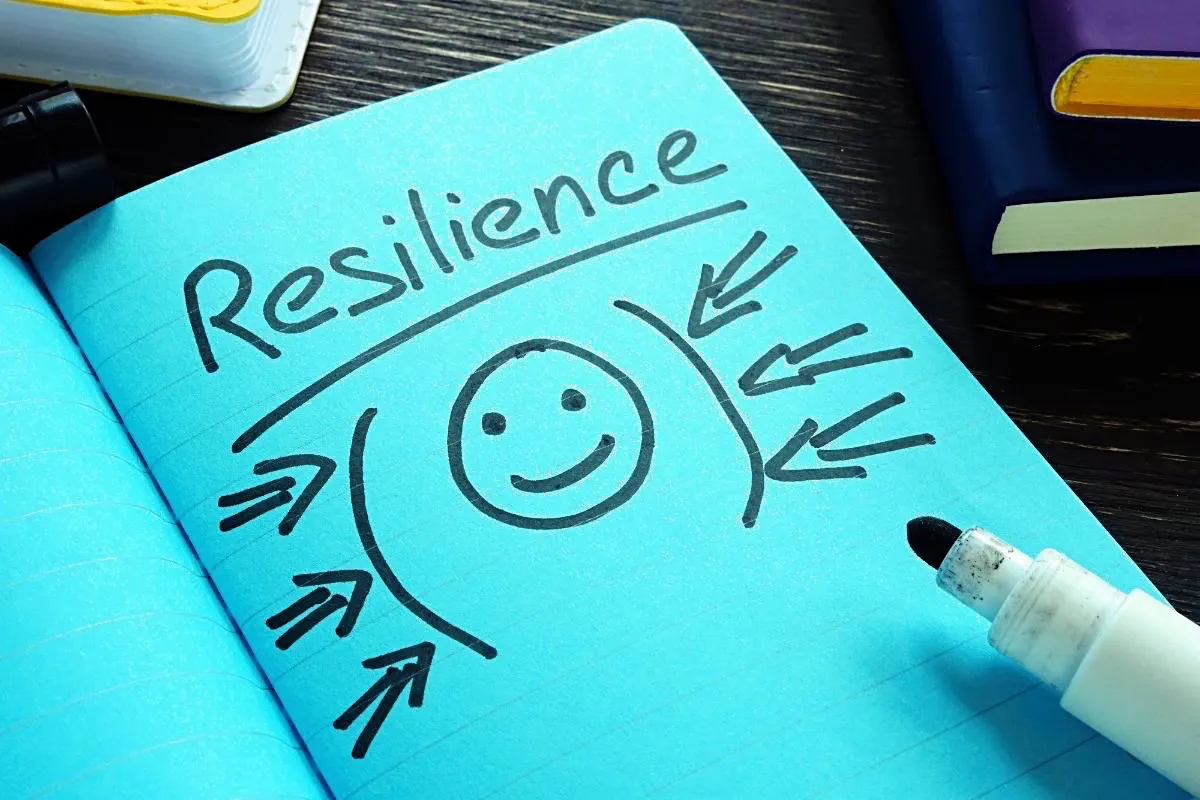
Buddha has offered a solution to this by teaching us to embrace the change, rather than fighting it. Change is an integral component of life. Learning to accept it makes all the difference and saves us from psychological, mental, and even physical suffering.
7 years back, I was leading a customer service centre. My naive mind always demanded perfection and absolutely zero errors from our service providers. Every downtime in any of the tools would throw me into the zone of irritation, and I would engage in impatient email exchanges with our vendors.
At the same time, these incidents would trigger anxiety in me. I would ruminate on the thoughts of ‘what if’. What if I were to lose my face as an exemplary employee? What if my KPIs get affected? What if I don’t get a promotion?
Had I understood the laws of nature and known how to control my mind back then, life could have been a little easier. I was trying to control everything, even those that are beyond my reach. I could only accept that which was favourable to me and strongly rejected all other alternatives, at least mentally.
Change is a part of life, including work. Sometimes there would be unforeseen situations, a technical glitch, or an unfulfilled vendor order. Accepting these changes would save us from immediate negative reactions that usually leave us drained, fatigued, or stressed.
Additionally, we are better equipped to handle these circumstances when we stop fighting the change. Otherwise, acting from the point of reaction would only trigger more reactions.
I am grateful to the Buddha for his teachings that continue to help me manage my work & life without those dramatic episodes anymore, and would be delighted to pay my homage on this Parinirvana Day.

Importance of Parinirvana Day
On this day, Buddha attained a state from which there is no returning, often termed as nirvana (liberation) without remainder. It is considered the final liberation from all physical and mental states.
A Buddhist practitioner’s ultimate goal is to achieve this state, which symbolises the complete extinguishing of the flames of craving, aversion, and delusion.
This special occasion is commemorated by reflecting on one’s life progress and how they can work towards the attainment of liberation. Also, it is an opportunity to remember the loved ones who have left their mortal abode and pay our love and respect to them.
The day is spent meditating, visiting monasteries or Buddhist temples. Giving donations to help the monasteries, monks, nuns, and the poor is a usual practice on this day, which is believed to generate merit for the donor to achieve liberation.
You may not be visiting a monastery or Buddhist temple, but what space might you create on Parinirvana Day to reflect on change?
To save this date to your calendar and learn of more Buddhist dates to make a note of, head over to the HappyMind Inclusion calendar