
Stress Awareness Month
Stress has a reputation.
A bad one.
It’s the thing we’re told to avoid, manage, minimise, push away. Something to “get under control” before it gets the better of us. And yet, for most of us, stress isn’t some occasional visitor, it’s woven quietly into everyday life.
For me, stress hasn’t always announced itself loudly. Sometimes it crept in silently. Other times, it hit me in ways I couldn’t ignore.

When stress didn’t look like stress
There was a period in my life when, on paper, everything was… fine.
My husband and I were trying for our second baby. Work was busy, but it always had been. Life was full, demanding, fast-paced. I didn’t feel stressed. I wasn’t lying awake panicking or overwhelmed by emotion. I was just cracking on, doing what I do best: keeping all the plates spinning.
Until one day, I couldn’t breathe.
Severe chest pains. Tightness. Shallow breaths. That terrifying moment where your mind jumps to the worst-case scenario. I genuinely thought I might be having a heart attack – maybe a mild one, I told myself, trying to rationalise the fear.
It took me far longer than it should have to call the doctor. An ambulance arrived. ECGs. Blood tests. Hospital checks. My husband stood there, white with fear.
And then the realisation landed.
It wasn’t my heart.
It was stress.
Anxiety.
Showing up physically and in one of the scariest ways possible.
That moment changed something in me. Because it forced me to see what I’d been ignoring: stress doesn’t always live in your thoughts. Sometimes it settles into your body first. My first thought was, we’re trying to have another baby and this is definitely not helping. I need help.
Stress looks different on everyone

This is something we don’t talk about enough.
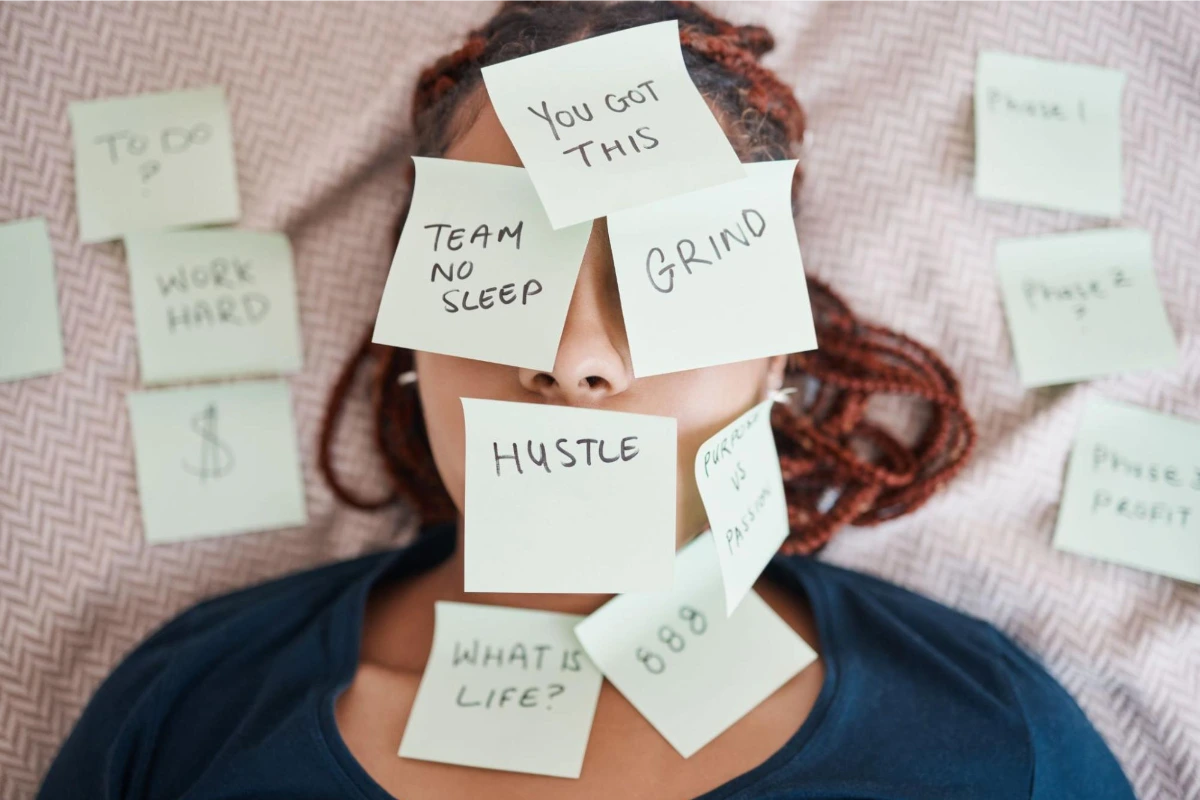
Stress isn’t one-size-fits-all. For some people it’s racing thoughts. For others, it’s headaches, stomach pain, chest tightness, exhaustion, or a body that simply refuses to slow down.
Emotionally and mentally, stress can show up as:
- An inability to switch your brain off
- Poor sleep (or no sleep at all)
- Burnout
- Feeling constantly “on edge”
- A sense that your mind is always ten steps ahead of your body
Physically, it can look like:
- Tightness in the chest
- Shortness of breath
- Muscle tension
- Fatigue that no amount of rest seems to fix
- A nervous system stuck in survival mode
For me, stress impacted all of it.
When there’s nothing left to give
By the end of a long working day, my brain was empty. Completely drained. I’d given everything I had to meetings, decisions, responsibility, problem-solving, and when I got home, there was nothing left.
No mental capacity.
No emotional buffer.

That’s when the guilt crept in.
The mum guilt. The snapping. The half-listening while my mind was still racing. The feeling that I wasn’t fully present for my children or my husband, not because I didn’t want to be, but because I simply couldn’t access the energy.
Stress didn’t just affect me. It affected how I showed up for the people I care about most.
“Good stress” easier said than done
I once heard a talk – I think it was a TED Talk – about stress having an unfair reputation. The idea was that stress isn’t always bad. That, when understood differently, it can be motivating. Powerful. Something that helps us perform, grow, succeed.
And I get it. I really do.
But here’s my honest truth.
When I feel that pressure in my chest.
When my breathing becomes shallow.
When my body is screaming before my mind has caught up…

Telling myself, “Let’s turn this into good stress and use it productively” feels almost laughable.
I’m not dismissing the idea. And if I’m honest, I’m a little jealous of those who seem able to harness stress and turn it into fuel. That’s an incredible skill.
I’m just not there yet.
I’m still figuring it out.
I might talk about stress like a thing of the past, but truthfully it lingers with me everyday. I am just trying and hoping to manage it a bit better.
Listening before your body has to shout
What Stress Awareness Month reminds me is this: stress isn’t a weakness. And ignoring it doesn’t make you strong.
Sometimes the most important thing we can do is notice how stress shows up for us – emotionally, mentally, physically – and stop judging ourselves for it.

My body forced me to pay attention when my mind wouldn’t. And while I wouldn’t wish that experience on anyone, it taught me something vital: stress deserves to be listened to long before it reaches crisis point.
So if you’re reading this and thinking, “That sounds familiar,” you’re not alone.
Maybe the first step isn’t learning how to turn stress into something productive.
Maybe it’s simply recognising it, without guilt, without comparison and asking yourself what your body and mind are trying to tell you.
And if, like me, you’re still figuring it out… that’s okay too.
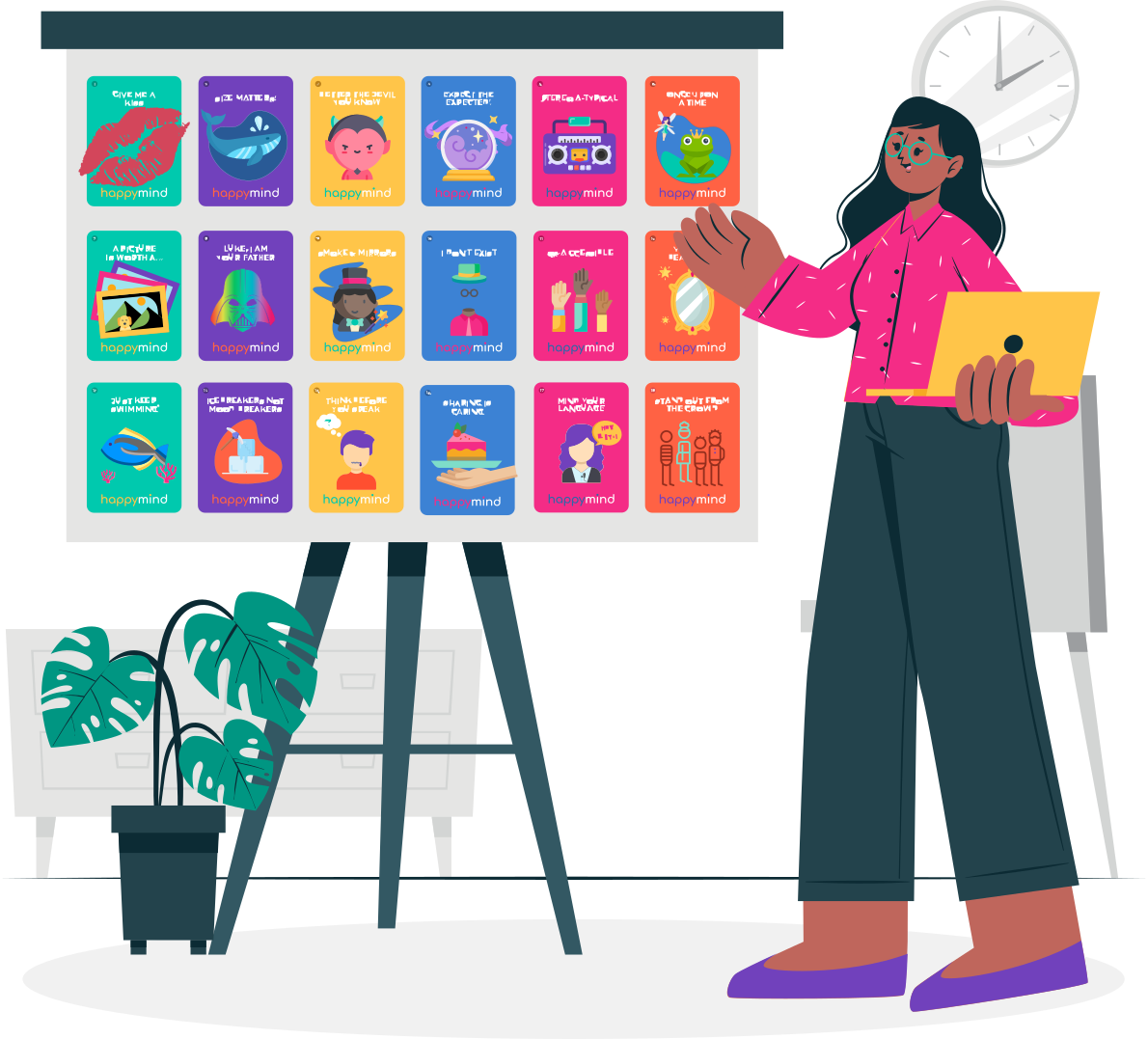
If you want to learn more about understanding your body’s stress response and learn how to keep it in check then check out HappyMind’s Stress Intelligence course
If stress is impacting you and you feel you need extra support, help is available. You don’t have to manage it alone.
- Mind (UK)
Information and support for mental health, including stress, anxiety and burnout.
👉 https://www.mind.org.uk - NHS – Stress, Anxiety and Mental Wellbeing
Practical guidance on recognising stress and accessing support.
👉 https://www.nhs.uk/mental-health - The Stress Management Society
Resources, awareness campaigns and practical tools around stress.
👉 https://www.stress.org.uk - Samaritans (UK & ROI)
If stress feels overwhelming or you’re struggling to cope, confidential support is available 24/7.
👉 https://www.samaritans.org
📞 Call free on 116 123